What is benchmarking?
As one of our country’s most aggressive efforts to reduce greenhouse gas emissions, Washington DC has created The Clean Energy Omnibus Amendment Act of 2018 (the CEDC Act). With this initiative, the District of Columbia plans to reduce the total carbon footprint by revising the district’s Renewable Energy Standards Portfolio.
How does this affect my building?
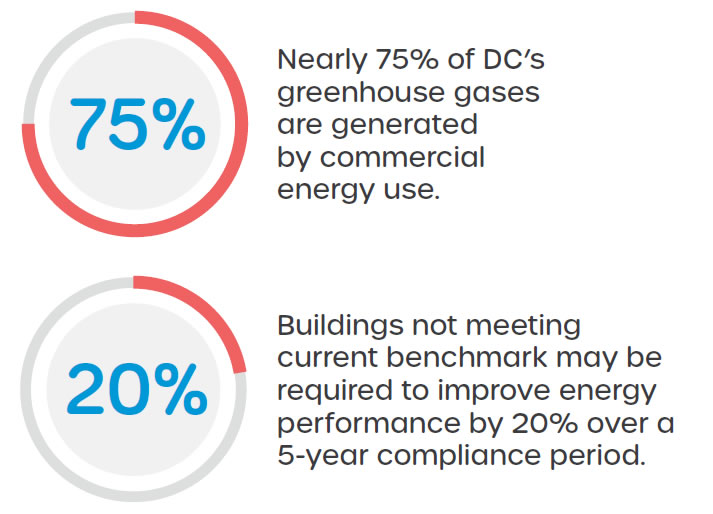
Building energy use accounts for nearly 75 percent of the District’s greenhouse gas emissions. The legislation takes aggressive and innovate action to target this sector, most notably with the first-of-its-kind Building Energy Performance Standard (BEPS). BEPS establishes a minimum energy performance for commercial and multifamily buildings. Buildings below the threshold will be required to improve their energy performance by 20% over the 5-year compliance period or take other prescriptive actions.
How can I raise my BEPS rating?
In order to raise the BEPS rating of a building, the buildings total carbon footprint must be lowered. This means raising the energy efficiency of the building by lowering the water, power and gas consumption of the building. Ultimately, this is done through your local HVAC and Plumbing contractors. There are several ways to raise the energy efficiency of your building depending on the current energy usage of your building’s systems.
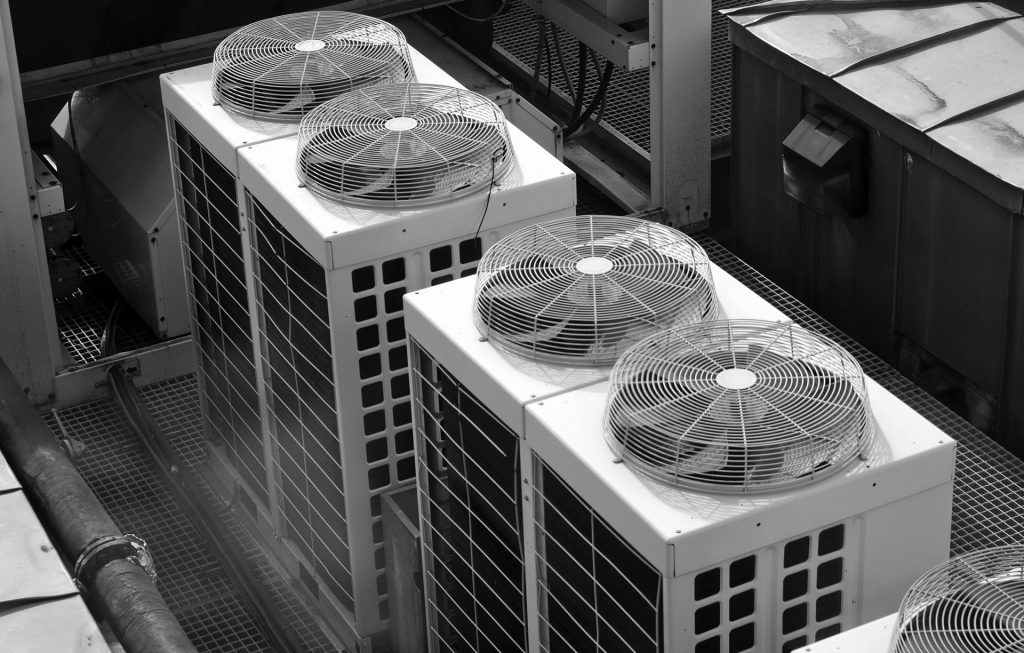
Routine preventive maintenance of your HVAC systems will ensure that your building’s equipment continues to run at optimal performance. For example, clean coils provide the best heat transfer and lower the energy consumption and total run hours of your equipment.
Complete unit replacements can be very costly and in some cases unfeasible. A retrofit including such things as new refrigerants, controls and compressors can allow for increased energy efficiency, environmentally friendly refrigerants, and extended life spans. Replacing thermostatic expansion valves with electronic expansion valves can increase unit efficiency up to 15%.
VFD’s allow electric motors to ramp up to operating RPM’s rather than being forced to full load as fast as possible. Using a VFD on any electric motor will greatly reduce the energy usage and increase the life of the motor.
When retrofits and repairs are no longer an option, sometimes the only thing left to do is upgrade. Because technology is ever-evolving, HVAC systems are becoming more efficiency at a competitive pace. Many buildings are upgrading to Inverter Technology Units, Variable Refrigerant Flow systems and Energy Recovery Units.
Who can I talk to about this?
Innovative Mechanical Systems specializes in Energy Efficiency upgrades and System Retrofits. For over 20 years our team has been providing the Washington DC, tri-state area with the highest level of HVAC and plumbing expertise. Ask us how we can help you lower the carbon footprint of your building today!